
"arabica production Africa"
2000 article(s) found

Varieties of coffee beans how long does it take for coffee trees to blossom
The Liberian species, the large seed species, is native to Liberia in Africa, as well as a few countries such as Malaysia. Its cultivation history is slightly shorter than the other two coffee trees. Liberian coffee trees are suitable for growing in lowlands. Its trunk is high and strong, it is 18 meters high, its leaves are large and tough, and its fruits and coffee beans are also very large. Its seed coat is close to the seed kernel and is scarlet when it is mature. Cited

An introduction to the characteristics of fine coffee beans in the manor area
Uganda is the country of origin of coffee grown in Robusta, but commercial cultivation of Arabica species here did not begin until early 1900. Today, there are still a large number of wild robusta coffee trees in Uganda, which is rare in cities in the world. As a landlocked country, the large coffee cultivation in Uganda is often interplanted, where coffee trees are mixed with food crops and rubber trees.

Data reference of hand flushing temperature, grindability and powder-to-water ratio of AA in Bugisu, Uganda
For the exchange of professional baristas, please follow the coffee workshop (Wechat official account cafe_style) Uganda Bugisu AA Coffee-thick, low-sour coffee Uganda is a landlocked country in eastern Africa, across the equator, east by Kenya, south by Tanzania and Rwanda, west by Congo (Kinshasa), north by Sudan. Most of the territory is located in the Central African Plateau, with lakes, with an average elevation of 1000m, 1200m, and mountains.

The roasting of Yega Sidamo Coffee in English
Yirgacheffe coffee raw bean is one of the most distinctive coffee in the world, rare and expensive, produced in the highlands of Ethiopia's sidamo province (4000 feet above sea level). It is an outstanding representative of washed coffee in Africa, with unique citrus and lemon fruit aromas, jasmine aromas, moderate roasting and soft acidity, deep roasting.

Introduction to the characteristic varieties and Brands of Uganda Fine Coffee Bean Flavor
In 1890, British troops invaded Buganda. Captain Frederick Frederick Lugard, the agent of the Royal British East Africa Company (later Governor of Hong Kong Luigi), forced King Mwaanga of Buganda to sign protection treaties with him twice. In June 1894, the British government signed the New Testament with Buganda, and Buganda officially became a British protectorate. Then, in 1896, Britain extended its protection to Ukraine

Introduction to varieties of Ugandan Coffee produced by Flavor description, Grinding scale and Taste treatment
Description of Ugandan Coffee Flavor description, Grinding scale, Taste treatment Variety introduction in Uganda Coffee production area varieties are generally good as long as raw beans are not 100 or yellowed, with low ripe fruit aroma, such as red wine taste, and thick mellow thickness, similar to some Kenyan beans with low flavor, but also with a mild soil flavor, so in terms of flavor characteristics.

Malawian Malawi Misu Kufeng producing area mzuzu | the flavor of a geisha in the sun geisha? How to cook
Professional coffee knowledge exchange more coffee bean information please follow the coffee workshop (Wechat official account cafe_style) Malawi Malawi Misu Kufeng producing area mzuzu | Sun geisha geisha flavor? How to cook it? Arabica coffee (Single Origin), which comes from a plateau 2000 meters north of Malawi and can only be harvested once a year. Coffee trees in high altitude producing areas

A brief introduction to the planting characteristics of Ugandan Coffee Bean Flavor Manor
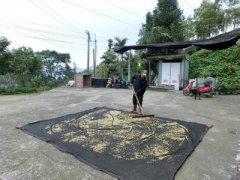
Uganda leads Africa in coffee production, accounting for more than 70% of its total exports. In the 1960s, Ugandan coffee production remained at 3.5 million bags a year. By the mid-1980s, coffee production had dropped to 2.5 million bags a year, mainly for political reasons. But now coffee production is on the rise again, currently about 3 million bags a year. Mainly exported to the European Union, including Germany and Italy
A brief introduction to the treatment method of grinding degree and baking degree of plain and mild Ugandan boutique coffee beans
Uganda is the birthplace of Robusta in Africa, just as Ethiopia is the birthplace of Arabica coffee, which was first found in Uganda. So far, Uganda has a history of growing coffee for more than 100 years. The output ranks second in Africa, after Ethiopia. At the same time, Uganda is one of the few major countries in Africa dedicated to the production of organic coffee. Wu

Basic information of coffee the small seed species of coffee encyclopedia is Coffea arabica
[scientific name] the small grain species is Coffea arabica L., the medium grain species is Coffea canephora, the large grain species is Coffea liberica, which is also called Arabian species, the medium seed species is also called Gaffra species, and the large grain species are also called Liberian species. There are two common species: Arabica and Robusta. Rubiaceae (Rubiaceae), coffee genus (Coffea) [domestic]

How to make Arabica coffee? is Arabica coffee good coffee?
Professional coffee knowledge exchange more coffee bean information Please pay attention to the coffee workshop (Wechat official account cafe_style) Arabica flavor and aroma of good quality, is often used to make boutique coffee, while robusta is easy to grow, has the advantage of low price, mainly used to match beans or as the main raw material of instant coffee. Generally speaking, Arabica is mainly used in individual or high-quality products.
The most important type of coffee in the world-the distribution and growth habits of coffee
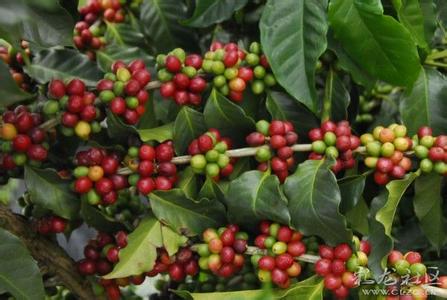
Coffee distribution: coffee trees grow in the tropical or subtropical regions of the tropical or subtropical regions with the equator as the center and between the latitudes of 25 degrees south and north. At present, coffee is produced in more than 60 countries, widely distributed in South America, Central America, the West Indies, Asia, Africa, Arabia, the South Pacific and Oceania. In terms of output, Pakistan, which accounts for the largest output in the world,

What are the main types of coffee trees and where do most coffee trees grow?
The main species of coffee tree: Liberian species Liberian species or large seed species, native to Liberia in Africa, and Malaysia and a few other countries. It has a slightly shorter history than the other two coffee trees. The Liberian coffee tree is suitable for lowland cultivation. It has a tall and strong trunk, which is 18 meters high, large and tough leaves, and large fruits and coffee beans. Its seed coat clings to the kernel,

Is Arabica coffee stronger? How to distinguish Robusta Arabica Libya coffee
Professional coffee knowledge exchange More coffee bean information Please pay attention to coffee workshop (Weixin Official Accounts cafe_style) Mantenin's Robusta lineage, Arabica beans or Katim or Katim? [I'm sure you've all seen chain coffee shops emphasize that they use "100% Arabica coffee beans," but why do they emphasize this coffee variety so much?] of Arabica

At present, the most important coffee beans in the world mainly come from Arabica.
At present, the most important coffee beans in the world mainly come from three original varieties: Arabica, Roberta and Liberia. The Arabica coffee tree, which originated in Ethiopia, accounts for 70% of the world's coffee production, and almost all the world-famous coffee varieties are Arabica species. Arabica coffee trees are suitable for growing in high mountains with large temperature difference between day and night, as well as low humidity and good drainage.

Species of coffee trees in Arabica, Robusta and Liberia
Types of coffee trees at present, the best quality coffee beans in the world mainly come from Arabica, Robusta and Liberia, which are mainly proud of coffee trees in the three places. 1. The origin of Arabica coffee tree is Ethiopia, and its coffee bean production accounts for 70% of the world's output. The world-famous Blue Mountain Garffin, Mocha Coffee and so on are almost all Arabica species. Arabica coffee

Description of characteristics and Flavor of Ugandan aa Coffee Bean introduction to Regional treatment of Taste production
Uganda aa coffee bean characteristics flavor description regional treatment method Uganda coffee growing industry is one of its export pillar industries, Uganda is the birthplace of Robsta in Africa, just as Ethiopia is the origin of Arabica coffee, Robster coffee was first found in Uganda. So far, Uganda has a history of growing coffee for more than 100 years. The output is in Africa.

Introduction to the standard sour taste and low taste of Ugandan coffee bean grading method
Uganda coffee beans are classified according to the standard sour taste and low taste. Uganda coffee beans have a unique flavor of delicate flavor, which is very suitable for making Italian and other flavors of coffee. more importantly, Ugandan coffee beans are strictly screened according to the standards of the international market to ensure their high quality and pollution-free characteristics. Africa is the hometown of Arabica and Robusta, the two major varieties of coffee.

What kind of coffee do Arabica species, Robusta species and Liberian species represent respectively?
Arabica coffee trees originated from Arabica coffee trees in Ethiopia and account for 70% of the world's coffee bean production. The world-famous blue mountain caffeine and mocha coffee are almost all Arabica species. The coffee trees planted in Arabica are suitable for growing in high mountains with large temperature difference between day and night, and ten soils with low humidity and good drainage. The ideal altitude is 500m ~ 2000.

Basic knowledge of Coffee trees Ethiopia in Africa
The origin of the coffee tree is Ethiopia in Africa. In botany, coffee trees belong to the long green trees of the subgenus Rubiaceae, and coffee beans, commonly known as coffee beans, are actually the seeds of the fruit of coffee trees, just because they are shaped like beans, so they are called coffee beans. Climate is the decisive factor for coffee cultivation. Coffee trees are only suitable for growing in the tropics or subtropics, so latitude 25 is south and north.